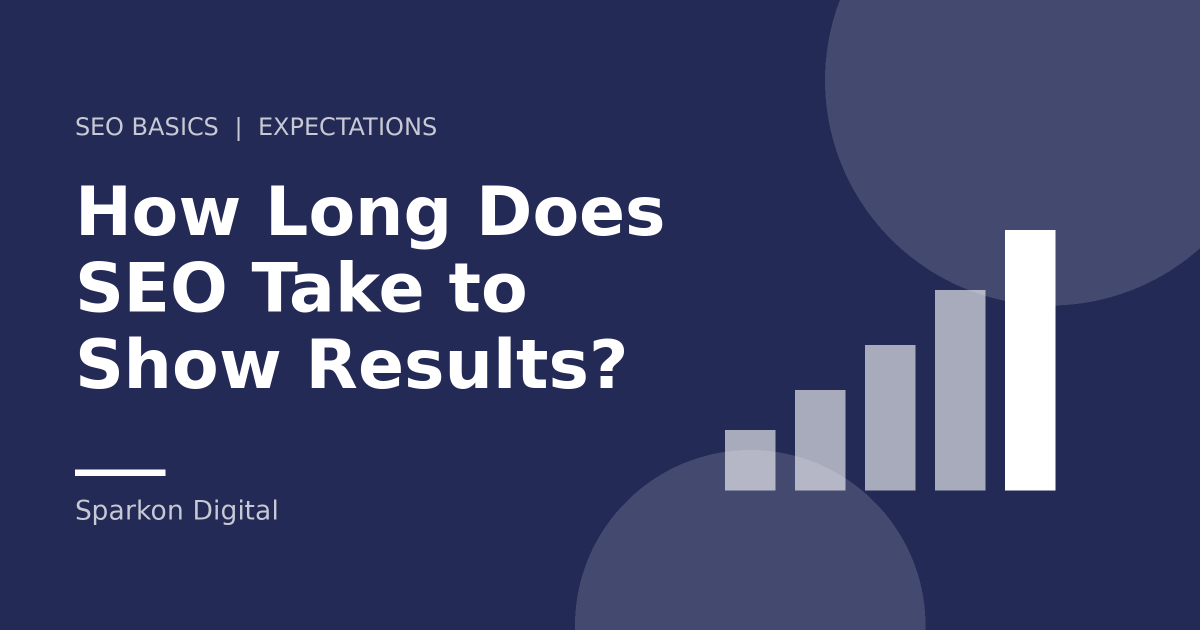
It is one of the most common questions in SEO, and the honest answer is: it depends. Still, you can understand what shapes the timeline and what progress to expect. This guide explains how long SEO takes and what you can do to move faster.
For the basics of how it works, see our introduction to what SEO is.
Key Takeaways
- SEO usually takes months, not days, and the timeline depends on competition, site condition, content and authority.
- Early signs of progress include better indexing, more impressions and improving rankings for lower-competition searches.
- Consistent work on the right priorities speeds results more than doing everything at once.
- Rankings can fluctuate normally, so judge progress by trends.
Why SEO Takes Time
Search engines need time to find, evaluate and trust your changes. New pages must be crawled and indexed, content has to earn visibility and links build gradually. SEO is an investment that compounds, not an instant switch.
What Affects the Timeline
- Competition. Crowded searches take longer than niche ones.
- Website age and history. Established sites with a good track record usually move faster.
- Current site condition. Technical problems must be fixed first.
- Content quality and quantity. Helpful, well-targeted content speeds things up.
- Authority. Quality links and mentions take time to earn.
- Consistency. Steady work beats bursts of activity.
A Typical Progress Pattern
Every website is different, so treat this as a rough guide and not a promise.
| Phase | What usually happens |
|---|---|
| First few months | Audit, fixes and foundations. Early signs such as better indexing and small ranking gains |
| Middle months | Traction builds as new and improved content starts to rank and traffic grows steadily |
| Later months | Growth compounds, with stronger rankings, authority and enquiries |
Why Some Websites See Results Faster
- They already have a clean, crawlable site
- They target realistic, specific keywords instead of the most competitive ones
- They have existing content that can be improved quickly
- They already have some trust and links
- They publish and improve consistently
- They match search intent closely
Signs Your SEO Is Working Before Rankings Move
Rankings are not the first thing to change. Look for these earlier signals:
- More pages indexed and fewer errors in Google Search Console
- Rising impressions, even with few clicks yet
- New queries appearing in your performance report
- Better click-through rates after improving titles and descriptions
- Higher positions on long, specific searches
- More time on page and better engagement
What to Do While You Wait
Waiting does not mean doing nothing. Use the time well:
- Finish the technical fixes from your audit
- Improve your best existing pages first
- Publish helpful content on a steady schedule
- Build relationships that can lead to quality links
- Review your reports monthly and adjust your priorities
A Realistic Mindset for the Months Ahead
Setting expectations early prevents disappointment and bad decisions. Think of progress in stages rather than a single finish line.
- Early on, the focus is learning what is wrong and fixing it. Progress is mostly invisible to visitors but visible in reports.
- In the middle, improved and new pages begin to earn visibility. Rankings may move up and down as search engines test results.
- Later, authority and content build on each other, and growth becomes steadier and easier to maintain.
- Throughout, competitors keep changing too, so staying consistent matters more than any single burst of work.
Treat SEO like building a reputation. It takes time, but the result is a lasting asset.
What Slows SEO Down
- Unresolved technical problems such as blocked or slow pages
- Targeting keywords that are too competitive for your current authority
- Content that does not match what searchers want
- Publishing rarely or inconsistently
- Making big changes and then reversing them
- Relying on shortcuts that search engines later discount
Removing these obstacles is often the fastest way to speed up results.
How to Set Expectations With Your Team
Share the timeline early. Explain that SEO builds in stages, agree on the measures you will review each month and set a date for the first proper review. When everyone understands that early progress shows up in indexing, impressions and technical health before it shows up in revenue, patience becomes far easier and decisions stay rational.
Curious what is realistic for your website?
Get a free SEO audit and we will explain what is holding you back and what could move first.
How to Speed Up Your SEO Results
- Start with a proper review. See how to do an SEO audit
- Fix technical blockers early. See technical SEO
- Target realistic keywords first. See keyword research
- Improve existing pages that already almost rank
- Earn quality links. See link building
How to Know It Is Working
Track the right signals, not just rankings. Our guide to SEO metrics and KPIs explains what to measure and when.
A specialist helps you avoid delays, as described in what an SEO specialist does. To get started with expert support, explore our SEO services.
Frequently Asked Questions
How long does SEO take to work?
It varies with competition, site condition and effort. Many sites see early progress within a few months, with stronger results building over time.
Why is SEO slow?
Search engines need time to find, evaluate and trust changes, and links and authority build gradually.
Can SEO give results in a week?
Small improvements, such as indexing, can appear quickly, but meaningful ranking growth normally takes longer.
How can I speed up SEO results?
Fix technical issues, target realistic keywords, improve existing pages and earn quality links consistently.
Why am I not seeing results after several months?
Common reasons are strong competition, unresolved technical problems, content that does not match search intent or too little authority. An SEO audit can show which of these is holding you back.
Is it normal for rankings to go up and down?
Yes. Small fluctuations are normal as search results change. Look at trends over weeks and months instead of daily movements.
Should I stop SEO if results are slow?
Not necessarily. First check whether the work is addressing the right problems. Stopping too early wastes the effort already invested, but continuing without a clear plan is also a waste.
Want a realistic SEO plan with clear milestones?
Our team can set expectations, build the plan and report your progress.